

myNature
Making Sustainable Landscaping More Accessible to Home Gardeners
Product Strategy · UX Research · Responsive UX/UI · Visual Identity




01
Project Overview
myNature began as a real business concept: a sustainable landscaping service that would help homeowners replace resource-intensive lawns and non-native ornamentals with beautiful native plantings. I developed the idea further as part of my Google UX certification.
The challenge wasn’t simply helping people buy native plants. It was making ecological knowledge approachable enough that ordinary homeowners could confidently choose plants, envision a landscape, and create something suited to their property. I designed a responsive experience that could bridge that gap between scientific information and practical garden planning.
Problem Statement
Homeowners interested in sustainable landscaping often lack an easy way to identify native plants suited to their property, understand how those plants work together, and envision an attractive alternative to a conventional lawn.
The Goal
Create a responsive garden-planning experience that helps homeowners discover appropriate native plants, understand their practical and ecological benefits, and confidently plan a more sustainable landscape.
My Role
Role: Product Designer • UX/UI Designer
Scope : Product strategy · User research · Information architecture · Wireframing · Prototyping · Usability testing · Visual identity · Responsive UI
Project Type : Independent concept developed during Google UX certification
02
Research & Key Insights
I interviewed six gardeners to understand how they chose plants, what they valued about their outdoor spaces, and whether ecological benefits influenced their decisions. I also reviewed competing garden retailers and planning tools to identify gaps in the existing experience.
The research revealed that interest in sustainable gardening wasn’t the primary obstacle. Gardeners struggled to find appropriate native plants, understand how plants worked together, and translate information into an achievable plan for their own space.
Main Pain Points

Native Plants Are Hard to Find
Local retailers often carry limited native selections, leaving gardeners without reliable local sources.

Plants Aren't Organized Around Garden Goals
Gardeners have to assemble compatible plants themselves rather than discovering combinations suited to pollinators, bloom times, conditions, or other goals.

Online Purchasing Creates Uncertainty
Quality, plant health, and suitability can be difficult to judge when purchasing plants remotely.

Gardeners Need More Variety and Guidance
Different landscapes and personal goals require more choice than many local retailers provide.
Personas


Based on user interviews and pain points, I created four personas to guide product development.
- The Family Gardener: Wants an outdoor space that is safe for their children as a place to learn to connect with nature, food, and beauty.
- The Practical Gardener : Wants sustainability without expensive or labor-intensive maintenance.
- The Thoughtful Gardener: Wants a place to de-stress and find calm.
- The Creative Gardener : Views the garden as personal expression and wants inspiration and variety.
User Journey Map

Mapping the existing garden-shopping journey revealed a fragmented experience. Users moved repeatedly between retailers, plant information, care resources, and inspiration before they could confidently make a purchase.
Competitor Audit
Competitive research showed that existing retailers largely treated plants as individual products. Information about ecological value, garden compatibility, and landscape planning was fragmented or difficult to use during the shopping process.
That created an opportunity for myNature to organize plant discovery around what gardeners wanted to accomplish, not simply what they wanted to buy.

How Research Shaped the Product
Discover by Goal
Help gardeners find plants based on what they want their landscape to accomplish.
Understand Compatibility
Make plant requirements, ecological relationships, and garden suitability easier to understand.
Plan with Confidence
Connect inspiration, plant selection, and practical guidance in one experience.
03
From Research to Structure
The research pointed toward an experience that needed to do more than sell individual plants. It needed to help gardeners discover plants by goal, understand how choices worked together, and move confidently from inspiration to a garden plan.
I translated those priorities into the site’s information architecture, then explored the core planning experience through sketches and low-fidelity prototypes.
Ideating
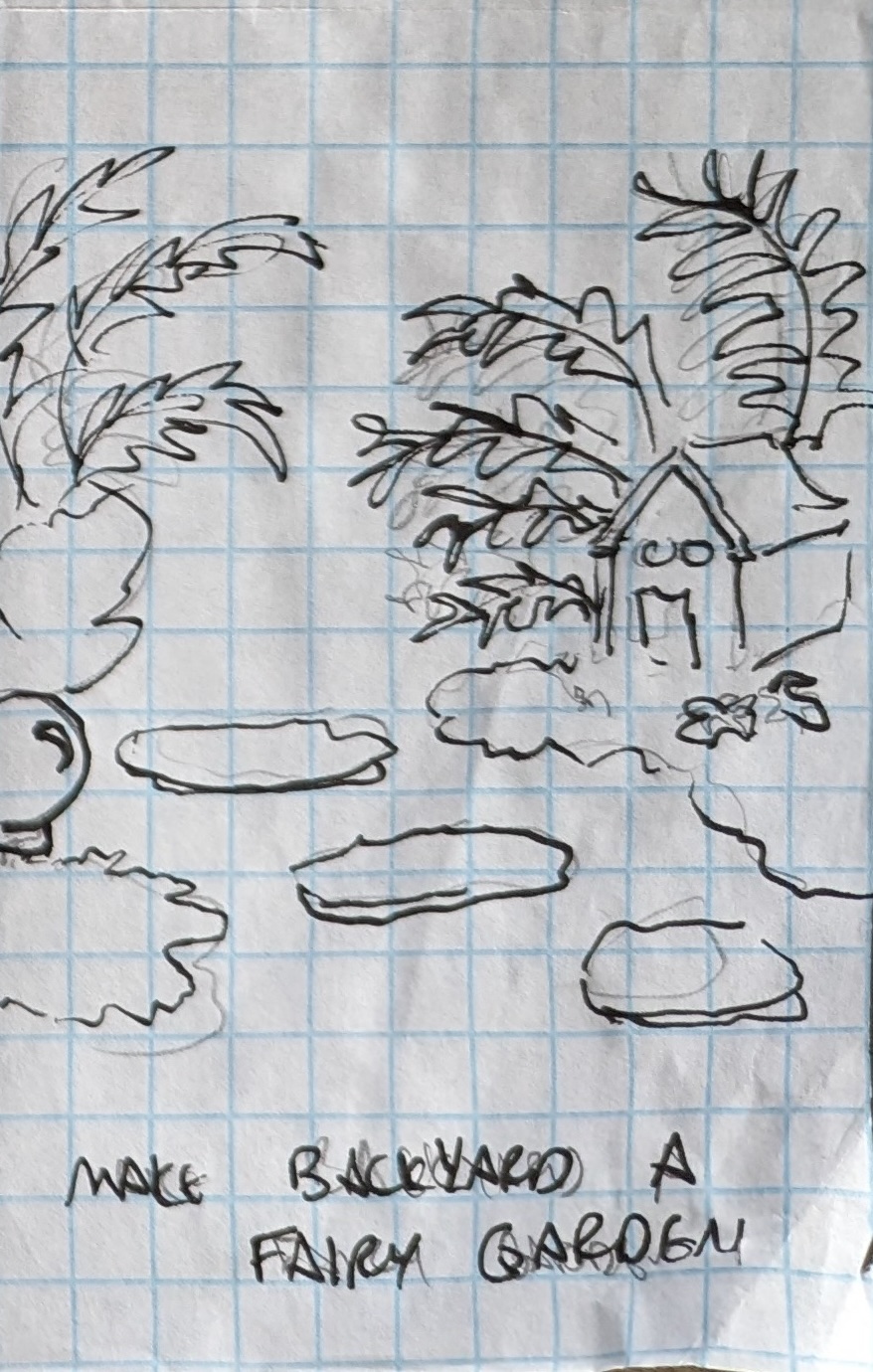
Early sketches explored ways to combine plant discovery, garden inspiration, education, and planning without overwhelming users.
Information Architecture
I organized the site around four core activities: discovering plants, finding inspiration, learning about sustainable gardening, and planning a garden. This brought resources users previously had to find across multiple sources into one connected experience.

Exploring the Experience
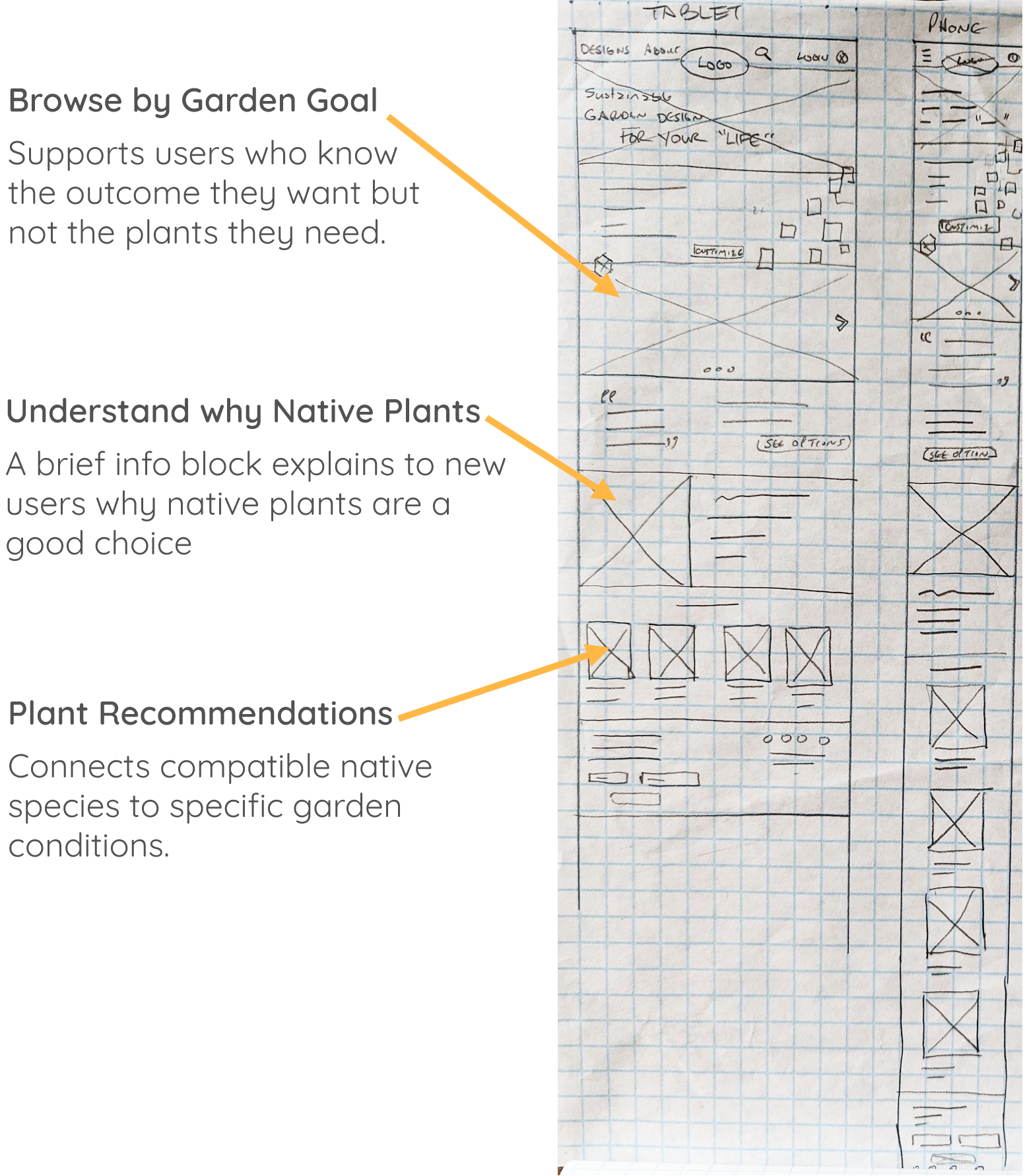
With the website architecture mapped out, I began exploring how those priorities would translate into the landing-page experience. This included extending the idea into how it would look on a phone and tablet.
Responsive Exploration
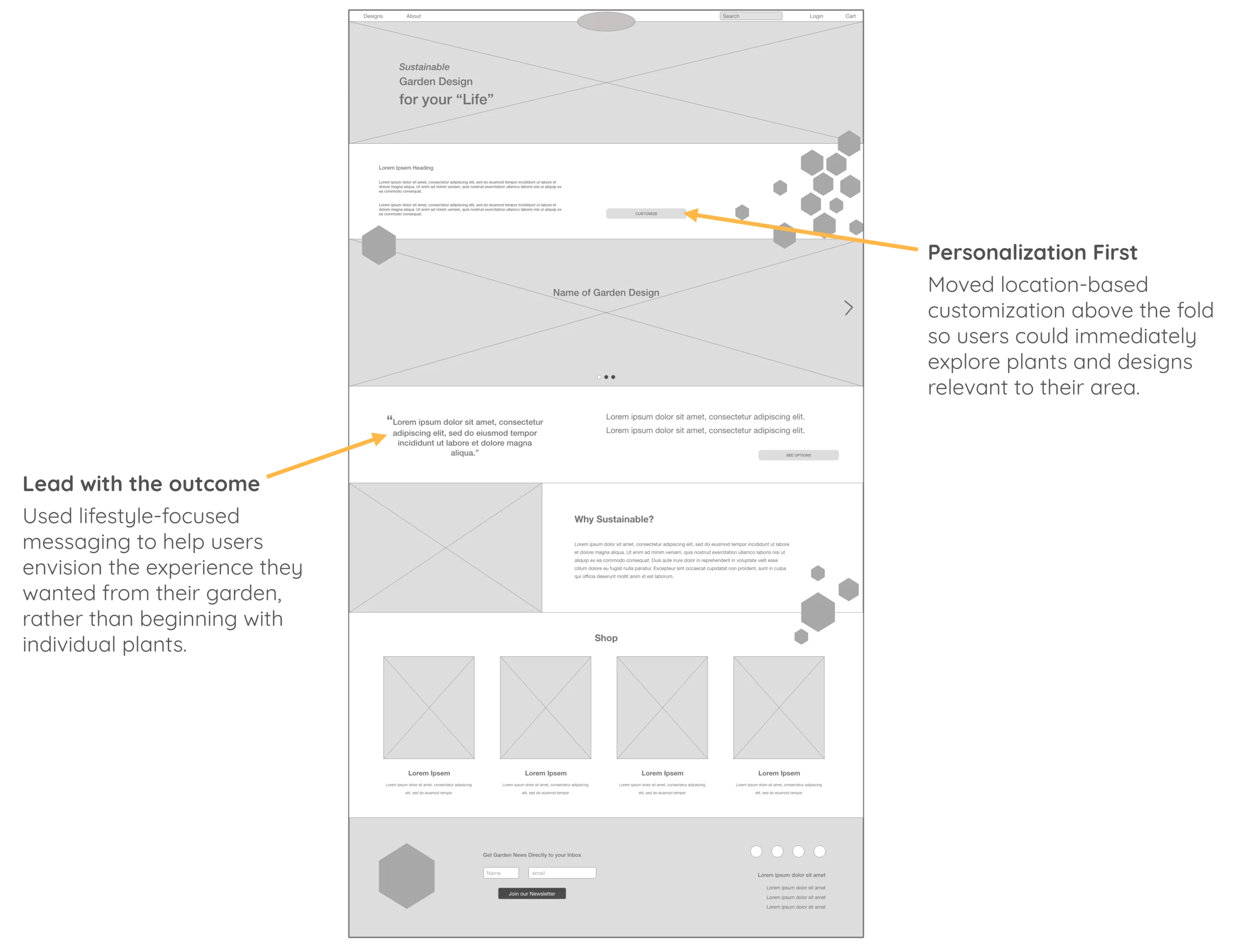

The same discovery-first structure was adapted for mobile, preserving customization, inspiration, and plant discovery within a much narrower browsing experience.
Exploring the Broader Experience


Building a Testable Prototype
I connected the core flows into a low-fidelity prototype to test whether users could move from garden inspiration to relevant plant choices and planning tools.
Watch Prototype
See the core experience in motion

Explore the Prototype
Use the interactive low-fidelity prototype
04
Testing the Core Experience
I conducted an unmoderated usability study with five participants to test whether users could navigate garden designs, discover plants, and understand how to add items to their garden plan. Sessions lasted 20–30 minutes and focused on the core low-fidelity prototype.
5 participants • Remote • Unmoderated • 20–30 minutes
Affinity Map

I grouped observations and participant feedback into recurring themes around navigation, adding plants, and interaction expectations. Four recurring issues revealed where the experience didn’t match users’ expectations and led to design changes.
Usability Study Themes
Users expected a direct path to shopping
3 of 5 participants looked for a direct Shop option rather than entering through garden designs.
Change: Added Shop to the primary navigation to match users’ expectations and provide a faster route to products.
Before

After

Clicking on “Shop” items created the wrong expectation
3 of 5 participants expected selecting a plant from the shopping experience to add it directly to their cart rather than redirecting them into a garden-design flow.
Change: Separated shopping from garden planning so purchasing behavior followed familiar e-commerce conventions.
Before

After

Images looked interactive when they weren’t
2 of 5 participants attempted to select garden images that appeared interactive but weren’t.
Change: Adjusted the interaction pattern so clickable elements behaved consistently with users’ expectations.
Before

After

Confidence mattered more than checkout speed
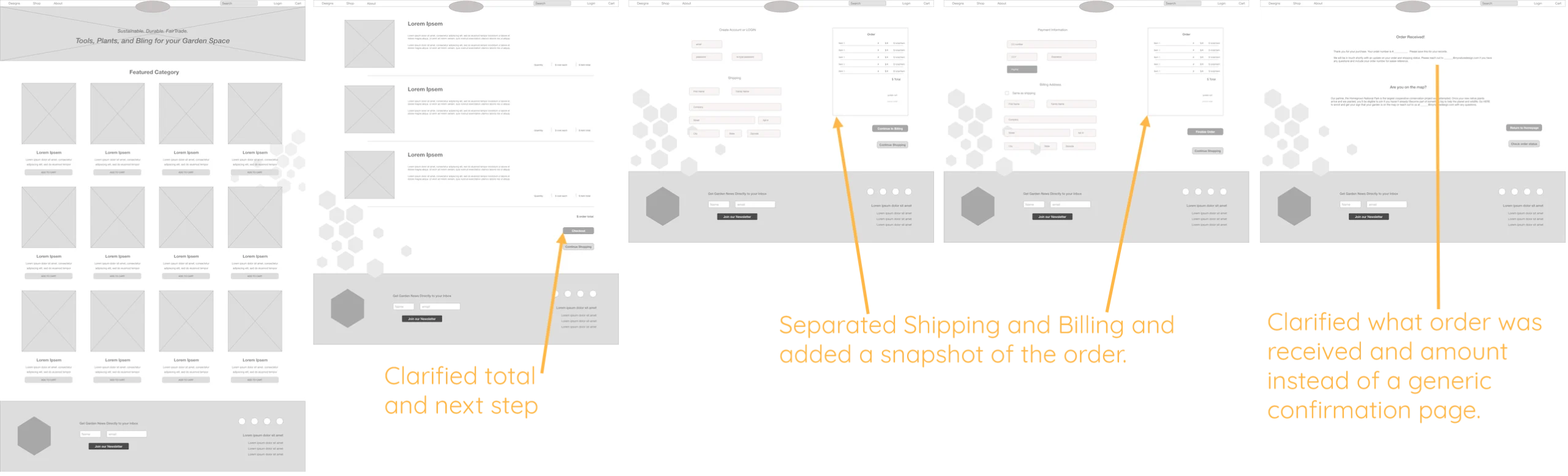
2 of 5 participants felt the checkout sequence moved to quickly and they weren’t certain what they were buying.
Change: Additional screens were added to the checkout sequence to give users more information about what they were purchasing.
Revised Checkout Flow
05
Creating the Visual Experience
With the core interactions validated through usability testing, I translated the revised experience into a responsive visual system designed to feel warm, optimistic, and connected to the natural world.
A Nature-Inspired Design System
I developed a warm, botanical visual system that balanced natural earth tones with brighter accents inspired by flowers and pollinators. Hexagonal forms introduced during wireframing became a recurring motif, creating visual continuity across navigation, illustration, and interface elements.


Wonder Garden

Meditation Garden

Children’s Garden

Foodie Garden

Entertainment Garden


Applying the System Across the Experience


Designed Across Devices
The final experience was designed across desktop, tablet, and mobile breakpoints, preserving the visual identity and core discovery experience while adapting content hierarchy and interaction patterns for smaller screens.


Experience the Prototype
Watch the Walkthrough

Explore the Interactive Prototype
06
What the Project Proved
The project validated the potential of the original business idea while revealing its complexity. Building a truly useful native-plant planning service would require localized plant data, regional suppliers, and more sophisticated garden-planning tools than a standard e-commerce experience. Starting with a limited geographic region would make a realistic first release possible.
The final concept moved beyond simply selling plants. It connected garden inspiration, native plant discovery, habitat value, and planning into a more holistic experience centered on what homeowners wanted their outdoor spaces to become.
I initially streamlined checkout to move users through the purchase quickly. Testing revealed that users preferred seeing each step, even if the process took slightly longer, because the additional visibility gave them greater confidence in what they were purchasing.
The project concluded with a high-fidelity responsive prototype that incorporated the first round of usability findings and was ready for further validation before development.
The final responsive prototype brought together my backgrounds in ecology, visual design, and UX around a problem I genuinely cared about solving.